
🎬 ถ้าใครเคยดูซีรีย์หรือหนังการแพทย์สมัยก่อน ก็จะเห็นว่าเวลาคนไข้หัวใจหยุดเต้น จะมีการช็อตหัวใจรัวๆ ไม่หยุดเพื่อปั๊มหน้าอกเลย ซึ่งแตกต่างจากตอนนี้มาก คำถามคือ… มันผิดจริงๆ ในทุกสถานการณ์มั้ย ? แล้วทำไมแต่ก่อนถึงแนะนำให้ทำแบบนั้น ?
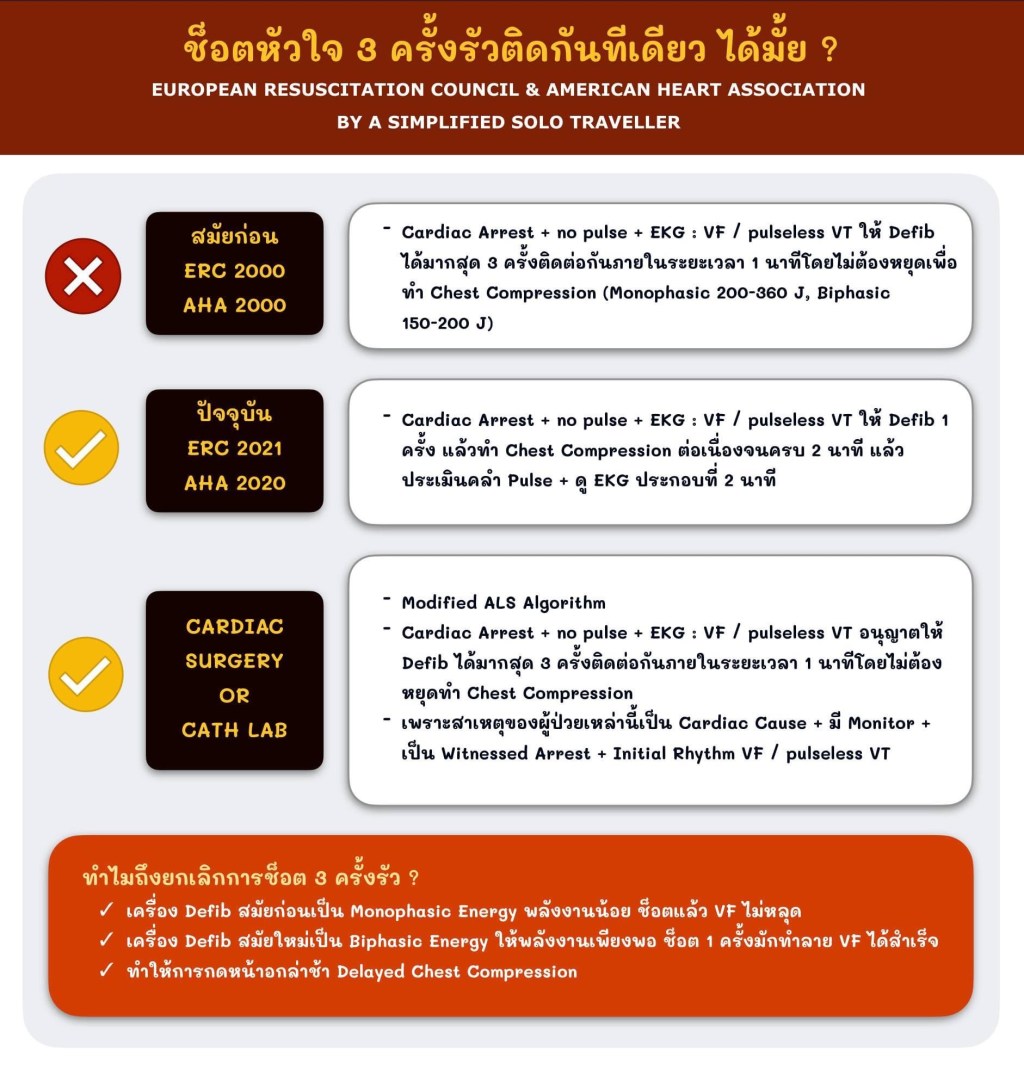
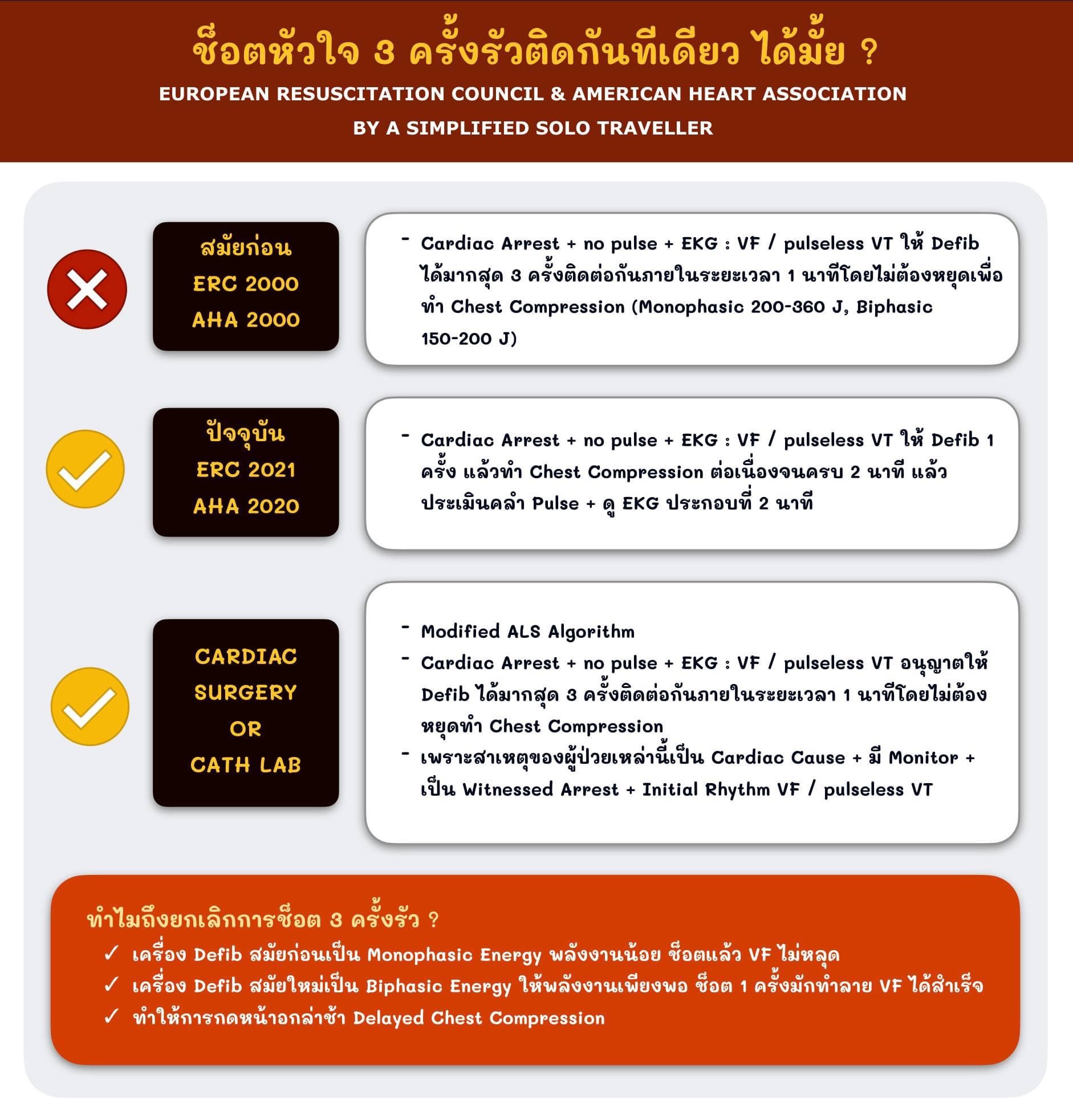
❌ ใน Guideline ERC (European Resuscitation Council) หรือ AHA (American Heart Association) สมัยเก่าปี 2000 เคยเขียนไว้ว่า หากคนไข้มี Cardiac Arrest ไม่มีชีพจร EKG พบ Ventricular Fibrillation (VF) หรือ Pulseless Ventricular Tachycardia (pVT) สามารถ Defibrillation ติดกันได้มากสุด 3 ครั้งภายในระยะเวลา 1 นาที โดยไม่ต้องหยุดเพื่อกดหน้าอกในระหว่างนั้นเลย หากใช้ Monophasic Energy เริ่มได้ตั้งแต่ 200 – 360 J หรือ Biphasic Energy 150 – 200 J
✅ แต่ใน Guideline ใหม่ ERC 2021 หรือ AHA 2020 กล่าวไว้ว่า ในกรณีปกติทั่วไป หากคนไข้มี Cardiac Arrest และ EKG เป็น VF / pulseless VT ให้ Shock 1 ครั้ง (Biphasic 200 J, Monophasic 360 J) แล้วกดหน้าอกต่อเนื่องเลย โดยไม่ต้องคลำ Pulse หรือดู EKG ประกอบ แล้วค่อยประเมินอีกทีเมื่อครบ 2 นาที
💖 ในปัจจุบัน ตาม ERC 2021 และ AHA 2020 อนุญาตให้ทำ Modified ALS Algorithm คือเมื่อ Initial Rhythm เป็น VF / pulseless VT ให้ช็อตมากสุดถึง 3 ครั้งติดต่อกันก่อนเริ่มกดหน้าอก โดยยังไม่ทำ Chest Compression ได้นานถึง 1 นาที “Defibrillation up to 3 stacked (successive) shocks and delay external chest compression for as long as 1 minute” มีเพียง 2 กรณีเท่านั้นคือ
1. ผู้ป่วยที่ได้รับการผ่าตัดหัวใจ Cardiac Surgery
2. ผู้ป่วยที่อยู่ในห้อง Cardiac Catheterisation Laboratory
❓ ทำไมถึงแนะนำ ?
💔 เพราะเชื่อว่าสาเหตุของ Cardiac Arrest ในคนไข้ Cardiac Surgery และคนที่อยู่ใน Cath Lab ส่วนใหญ่เกิดจากสาเหตุทางหัวใจซะส่วนใหญ่ และคนไข้เหล่านี้มักจะติด Monitor อยู่แล้ว + เป็น Witnessed Arrest ที่ Initial Rhythm เป็น VF / pulseless VT
📚 ใน AHA และ ERC อ้างอิงตาม European Association for Cardio-Thoracic Surgery (EACTS) guideline, The Society of Thoracic Sugeons (STS) expert consensus document, European Association of Percutaneous Cardiovascular Interventions (EAPCI), Society for Cardiovascular Angiography and Interventions (SCAI) และ the International ECMO Network and the Extracorporeal Life Support Organization (ELSO)
❓ ทำไมถึงยกเลิกการช็อต 3 ครั้งรัว ?
🤨 เครื่อง Defibrillator สมัยก่อนมักช็อตด้วย Monophasic Energy พลังงานของ Monophasic ไม่เพียงพอที่จะทำลาย VF/VT ดังนั้นจึงแนะนำให้ช็อตหลายครั้ง แต่ในปัจจุบัน เครื่อง Defibrillator จะช็อตด้วย Biphasic Energy ซึ่งให้พลังงานไฟฟ้าที่พอเพียง สามารถทำลาย VF ได้มากถึง 90% ดังนั้นการช็อตเพียง 1 ครั้งก็เพียงพอ ถ้าช็อต 1 ครั้งแล้ว VF ไม่หลุด โอกาสที่ครั้งต่อไปจะ Terminate VF ก็มีน้อย
⚡️ นอกจากนี้ หลังทำลาย VF สำเร็จ คนไข้ส่วนใหญ่จะกลายเป็น PEA / Asystole อยู่นานหลายนาที ดังนั้น ถ้ารอช็อต 3 ครั้ง จะทำให้การกดหน้าอกล่าช้า Delay + Prolonged Interruption of Chest Compression
🔥 สรุป ตอนนี้แนะนำว่า ในสถานการณ์ปกติทั่วไป หลังจากช็อต 1 ครั้ง ให้ CPR ต่อเลยทันทีแล้วประเมินอีกครั้งที่ 2 นาที กรณี Asystole / PEA ให้ทำตาม ACLS ปกติ สามารถทำ 3 stacked shocks ในกรณีคนไข้ Cardiac Surgery หรืออยู่ใน Cardiac Cath Lab เท่านั้น ควรปรึกษา Cardiologist / CVT Surgeon ก่อนทำ Modified ALS นะ
🌟 ข้อคิดจากเรื่องนี้ 🌟 ความรู้ทางการแพทย์มีการเปลี่ยนแปลงตลอดเวลา สิ่งที่เราคิดว่าถูกในตอนนี้ อาจจะผิดในอนาคตก็ได้ ดังนั้นบุคลากรทางการแพทย์ควรจะ Update ตลอดเวลา
Reference
Lott, C. et al. (2021) European Resuscitation Council Guidelines 2021: Cardiac arrest in special circumstances. Resuscitation. 161, pp. 152-219.
Hazinski, M. F. et al. (2005) Major changes in the 2005 AHA guidelines for CPR and ECC: Reaching the tipping point for change. Circulation.
Latorre, F. et al. (2001) European Resuscitation Council Guidelines 2000 for Adult Advanced Life Support. Resuscitation. 48, pp. 211-221.
Nolan, J. P. et al. (2010) European Resuscitation Guidelines for Resuscitation 2010 Section 1. Executive summary. Resuscitation. 81, pp. 1219-1276.
American Heart Association (2005) Part 7.2: Management of Cardiac Arrest. Circulation. 112, pp. 58-66.
Panchal, A. R. et al. (2020) Part 3: Adult basic and advanced life support. Circulation. 142, pp. S366-S468.
 A Simplified Solo Traveller
Leave a comment