
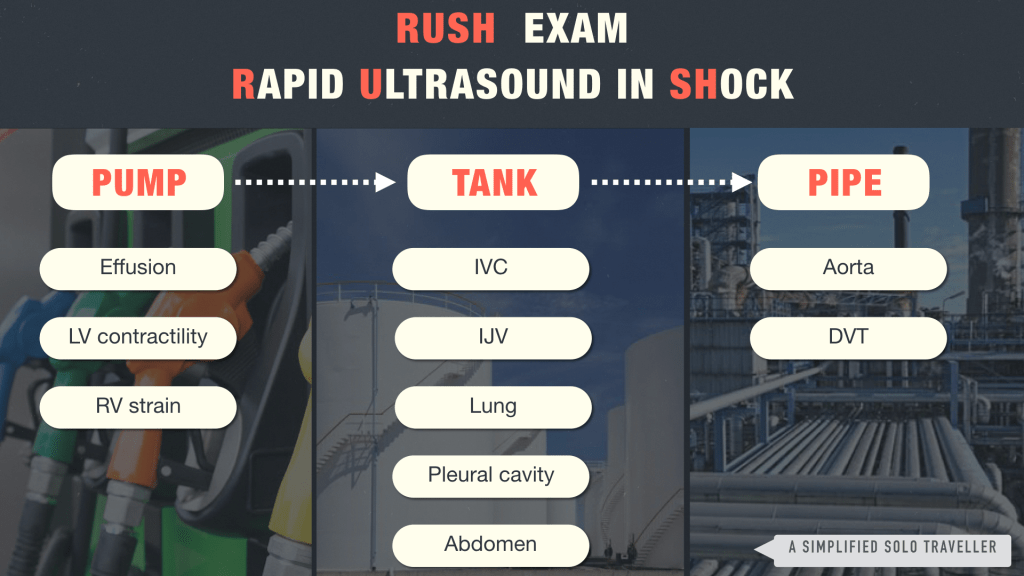
RUSH Exam : Rapid Ultrasound in SHock in the Evaluation of the critically Ill
Emerg Med Clin North Am. 2010 Feb;28(1):29-56, vii. doi: 10.1016/j.emc.2009.09.010.
https://www.ncbi.nlm.nih.gov/pubmed/19945597?report=abstract
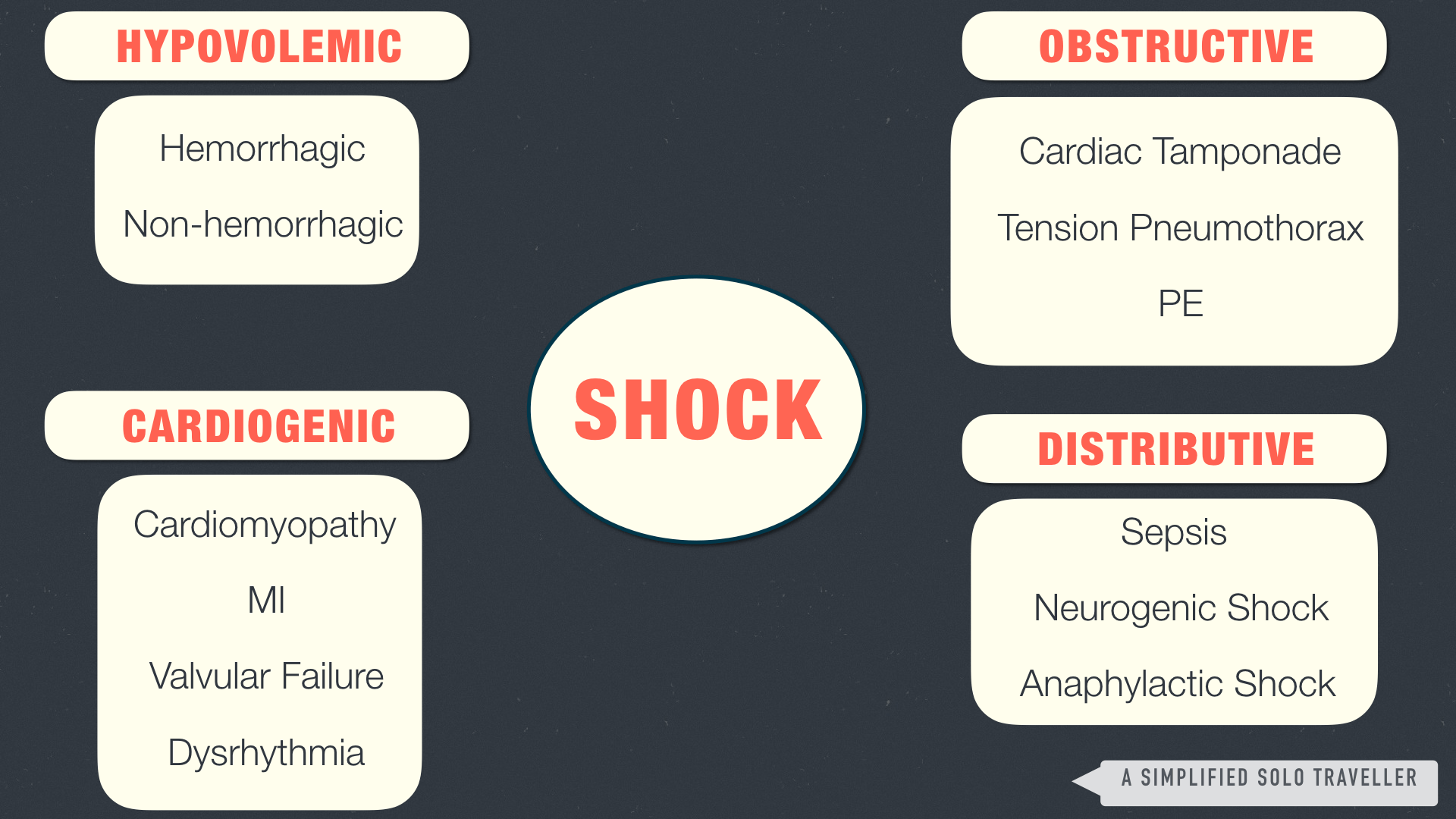
⭐️ Ultrasound เป็นตาที่ 3 ที่ช่วยในการดูแลคนไข้ที่มีภาวะ Shock ข้อดีคือทำง่ายที่ bedside และ non-invasive ข้อเสียคือ operator dependent โดย Shock แบ่งเป็น 4 ประเภทคือ
1. Hypovolemic เช่น hemorrhage จาก trauma, GI, intraabdominal หรือ rupture aortic aneurysm, หรือ dehydration สิ่งที่พบคือ Hypercontractile heart, small chamber, flat IVC และพบสาเหตุของ fluid loss ใน pleural, peritoneal และ aortic dissection
2. Distributive เช่น sepsis, neurogenic shock from spinal cord injury, anaphylactic shock สิ่งที่พบคือ Hypercontractile heart, normal/small IVC, normal pipe
3. Cardiogenic เช่น cardiomyopathy, myocardial infarction, valvular failure สิ่งที่พบคือ Hypocontractile heart, dilated heart, distend IVC, B line, pleural effusion
4. Obstructive เช่น cardiac tamponade, tension pneumothorax และ pulmonary embolism สิ่งที่พบคือ Hypercontractile heart, pericardial effusion, distend IVC, absent lung sliding, lung point, barcode sign, DVT
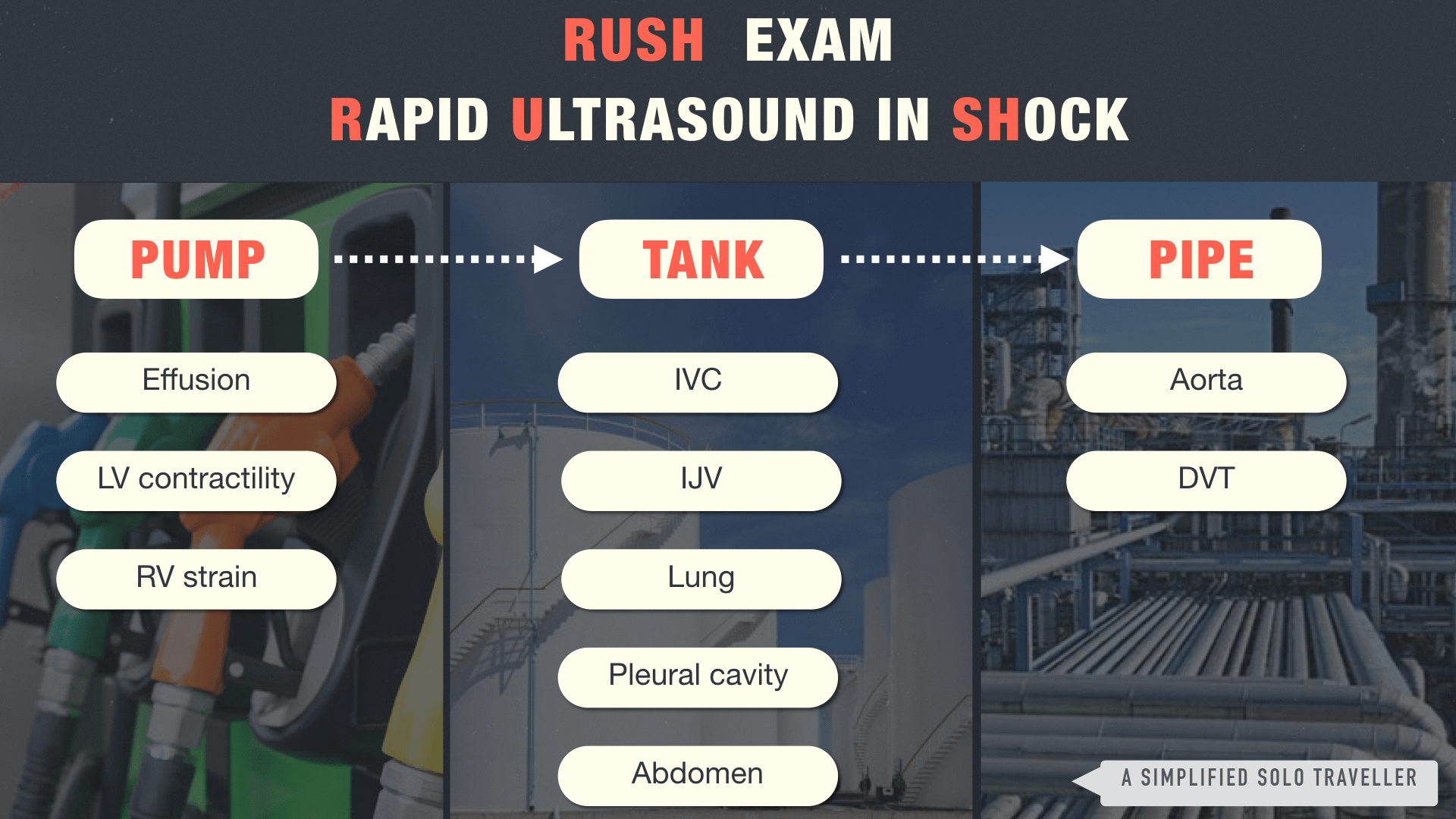
⭐️ ใน Rush Exam (Rapid Ultrasound in SHock) จะดูหลักๆ 3 อย่างคือ
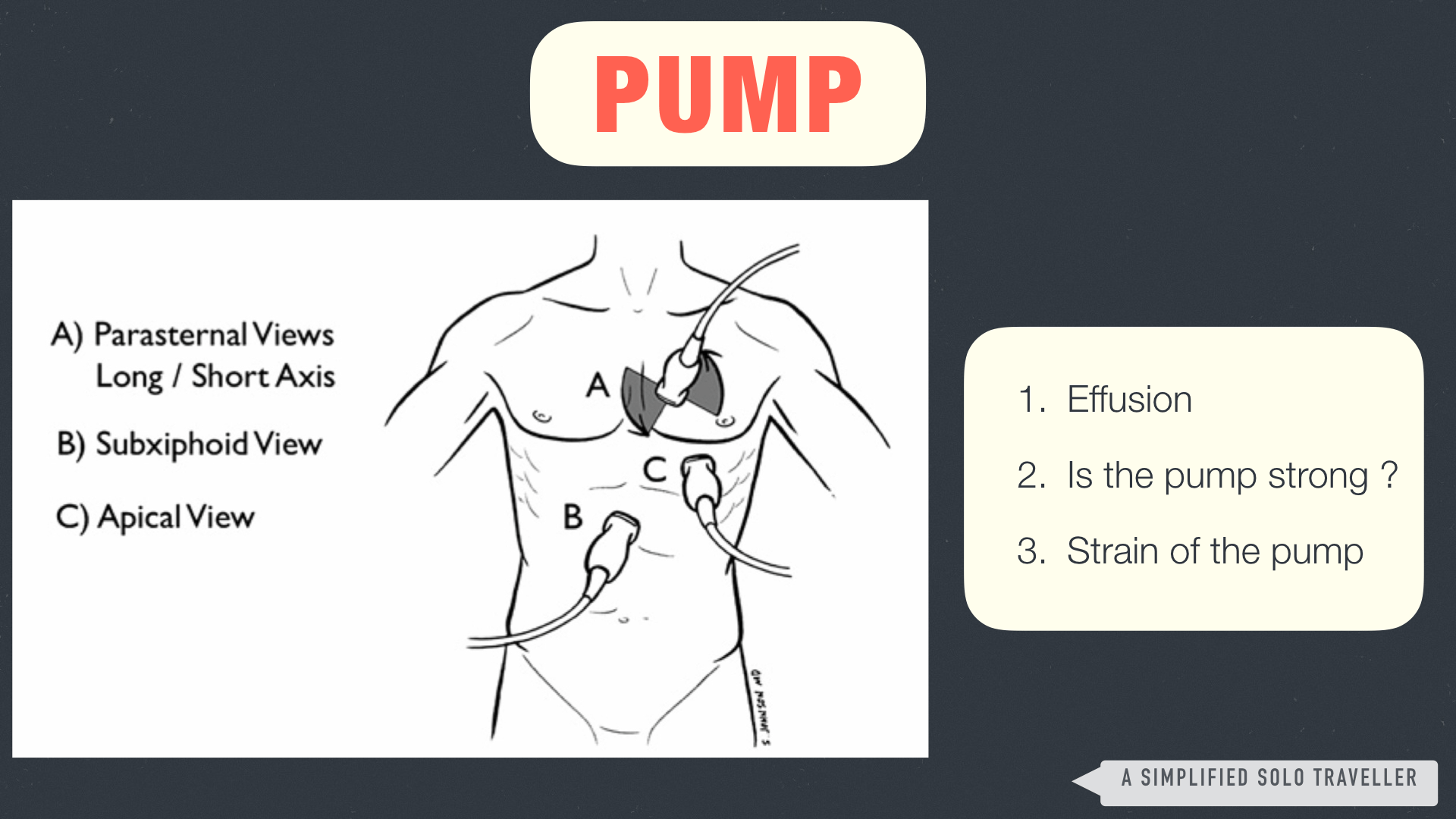
1. Pump ประเมินที่หัวใจ ใช้ probe echo ดู 3 อย่างคือ
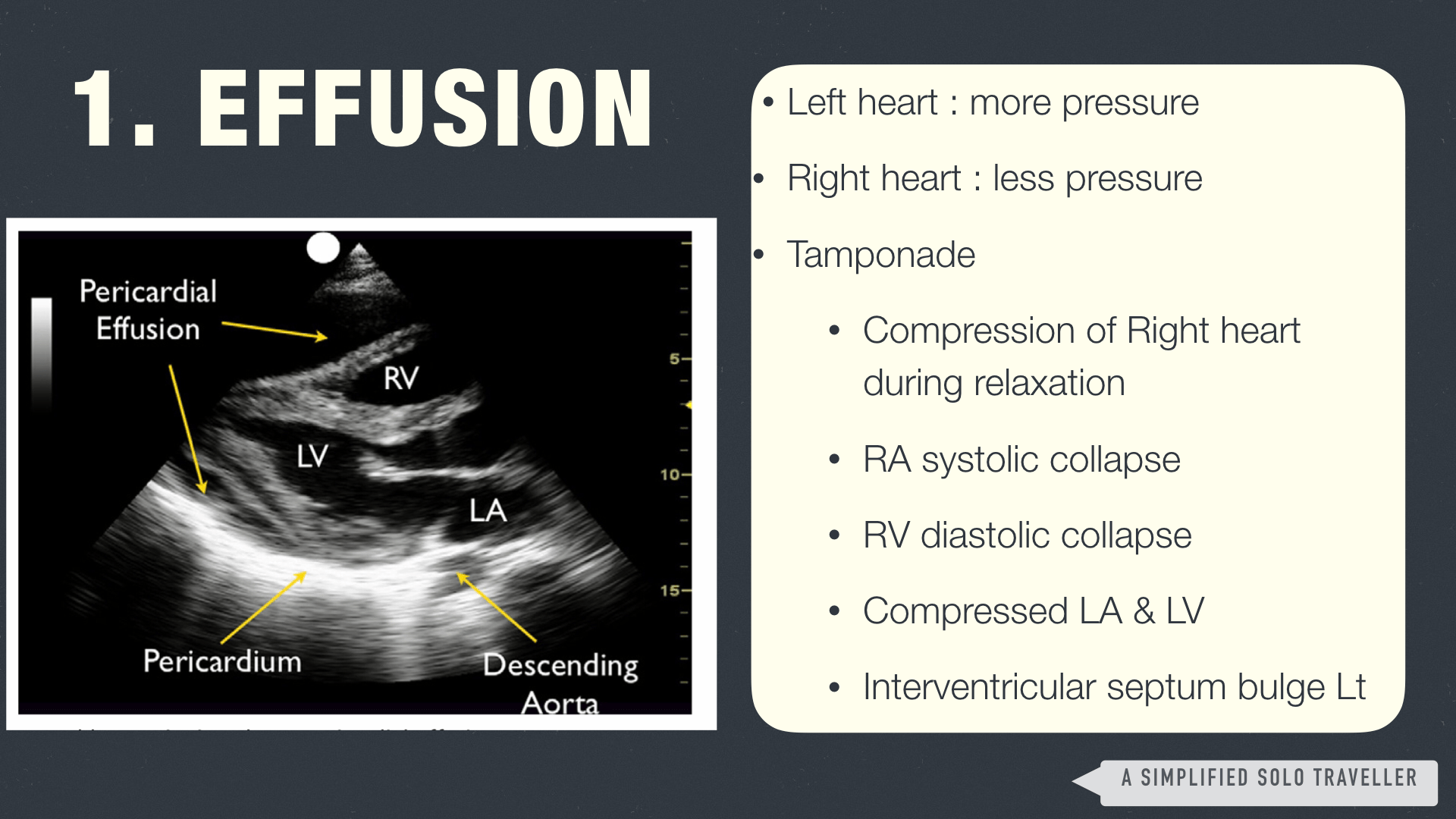
❤️ Cardiac Effusion – cardiac tamponade จะมี Left heart pressure > Right heart pressure ดังนั้นจะพบ Right Atrium systolic collapse, Right Ventricle diastolic collapse, Left Atrial & Ventricle collapse, interventricular septum bulging to left side และ swinging heart
❤️ Is the pump strong? – ดู heart contractility โดยเทียบระหว่างช่วง systole และ diastole, wall ขยับเท่าๆ กันและบีบตัวสุดในช่วง systole ใน parasternal long axis จะดูช่วงที่ anterior leaflet แตะ septal wall และใน parasternal short axis จะดูช่วงที่ Left Ventricle muscular ring บีบตัวเข้าหากัน
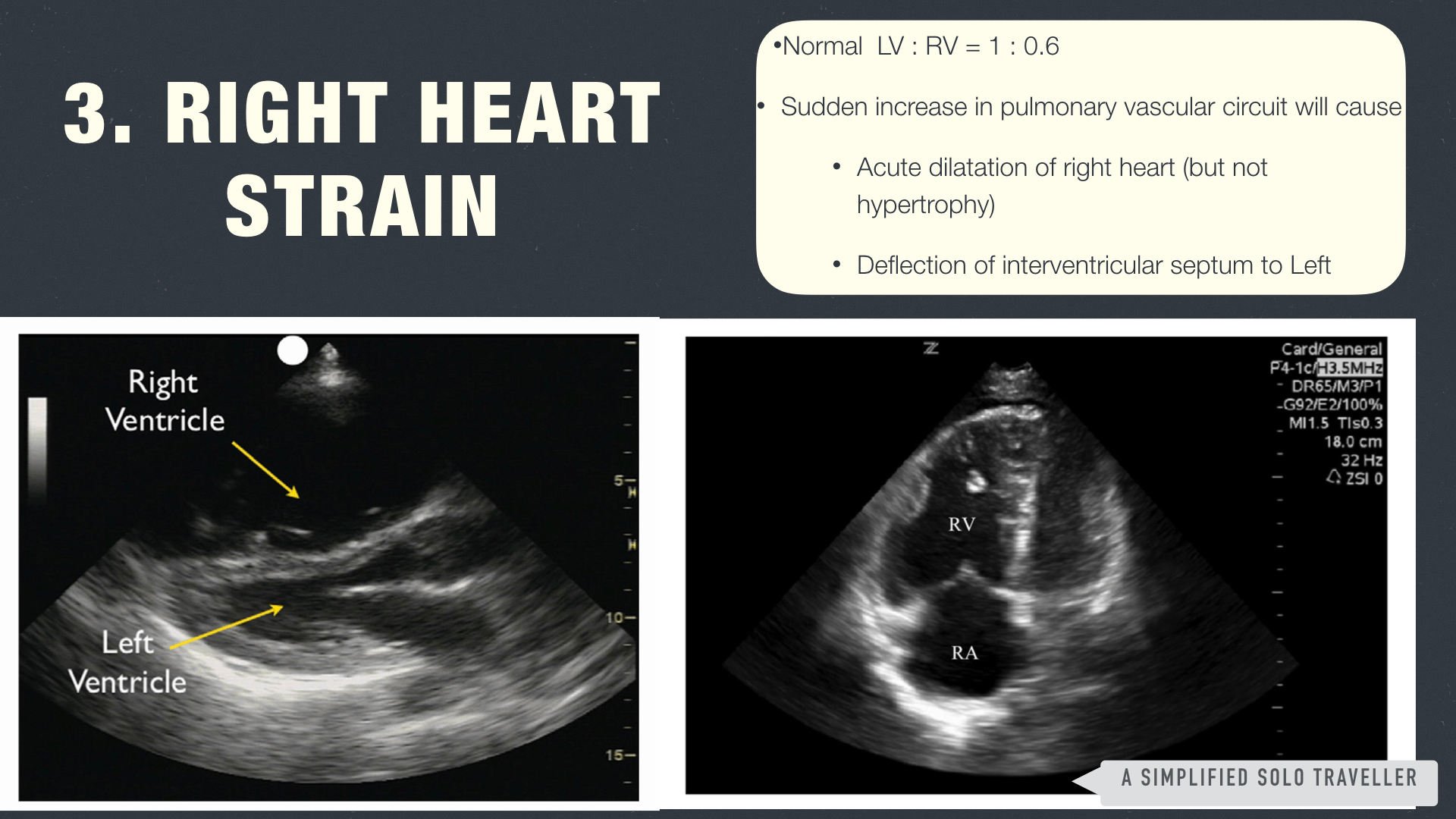
❤️ Strain of pump – right ventricular strain for pulmonary embolism เช่น Right Atrium & Ventricular dilatation (แต่ไม่ใช่ hypertrophy เพราะไม่งั้นอาจเป็น chronic pulmonary hypertension) สัดส่วนปกติของ Left ventricle ต่อ Right ventricle คือ 1 : 0.6 (จำง่ายๆ ว่า LV ต้องใหญ่กว่า RV) มี deflection of interventricular septum to left, Left Ventricular D-Shape หรืออาจพบ intra-cardiac thrombus เป็นต้น

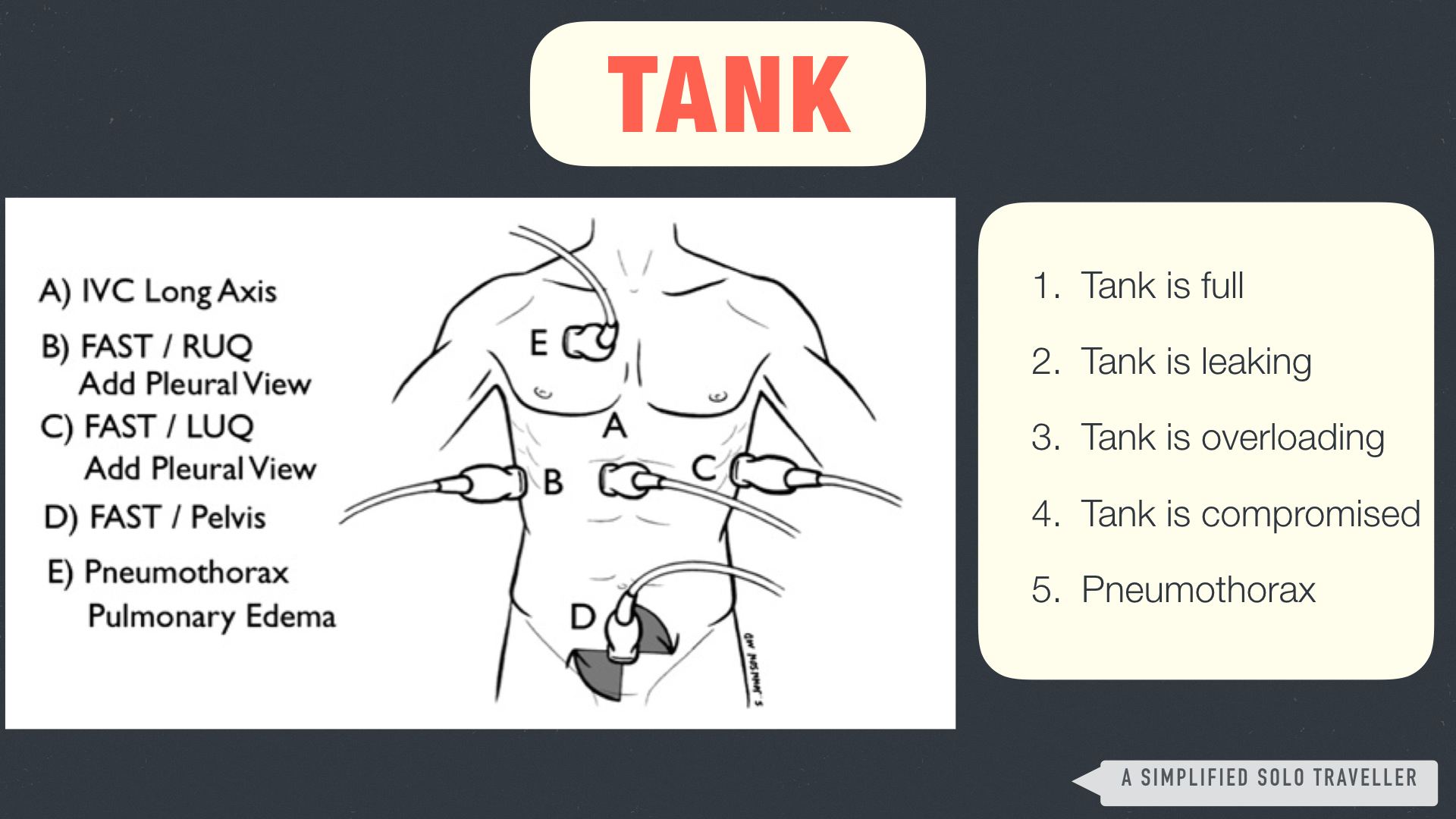
2. Tank ประเมินเรื่อง volume status, fluid loss และ pneumothorax คือดู IVC, JVP, lung, pleural cavity, abdominal cavity สิ่งที่ต้องดูคือ
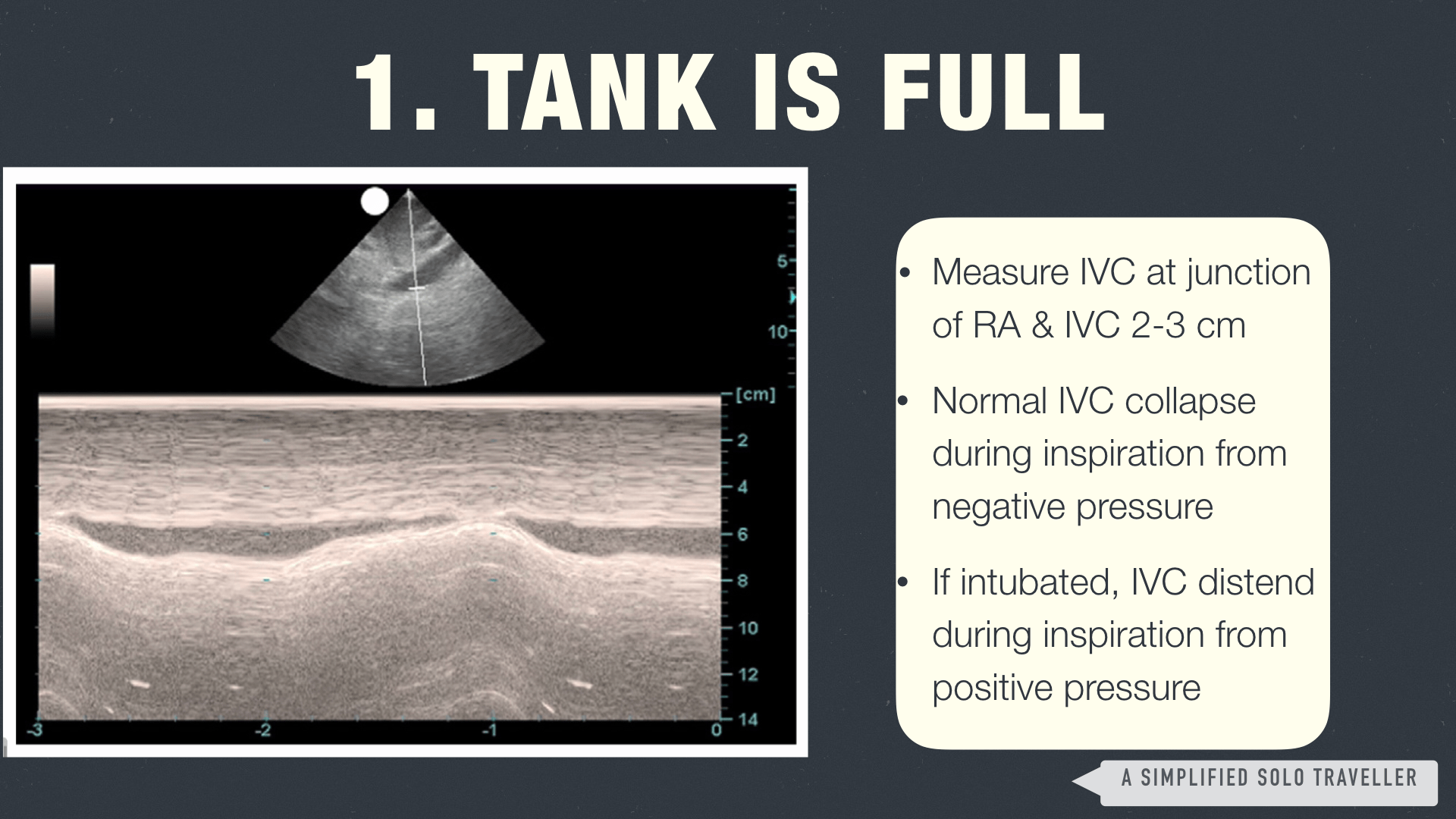
🥃 Tank is full เช่นให้การให้ iv fluid ใน septic shock ถ้าน้ำพอแล้วก็พิจารณาให้ vasopressor ให้ใช้ probe curvilinear / echo วัดที่ IVC subxiphoid view บริเวณใต้ตับห่างจาก RA ประมาณ 2-3 cm
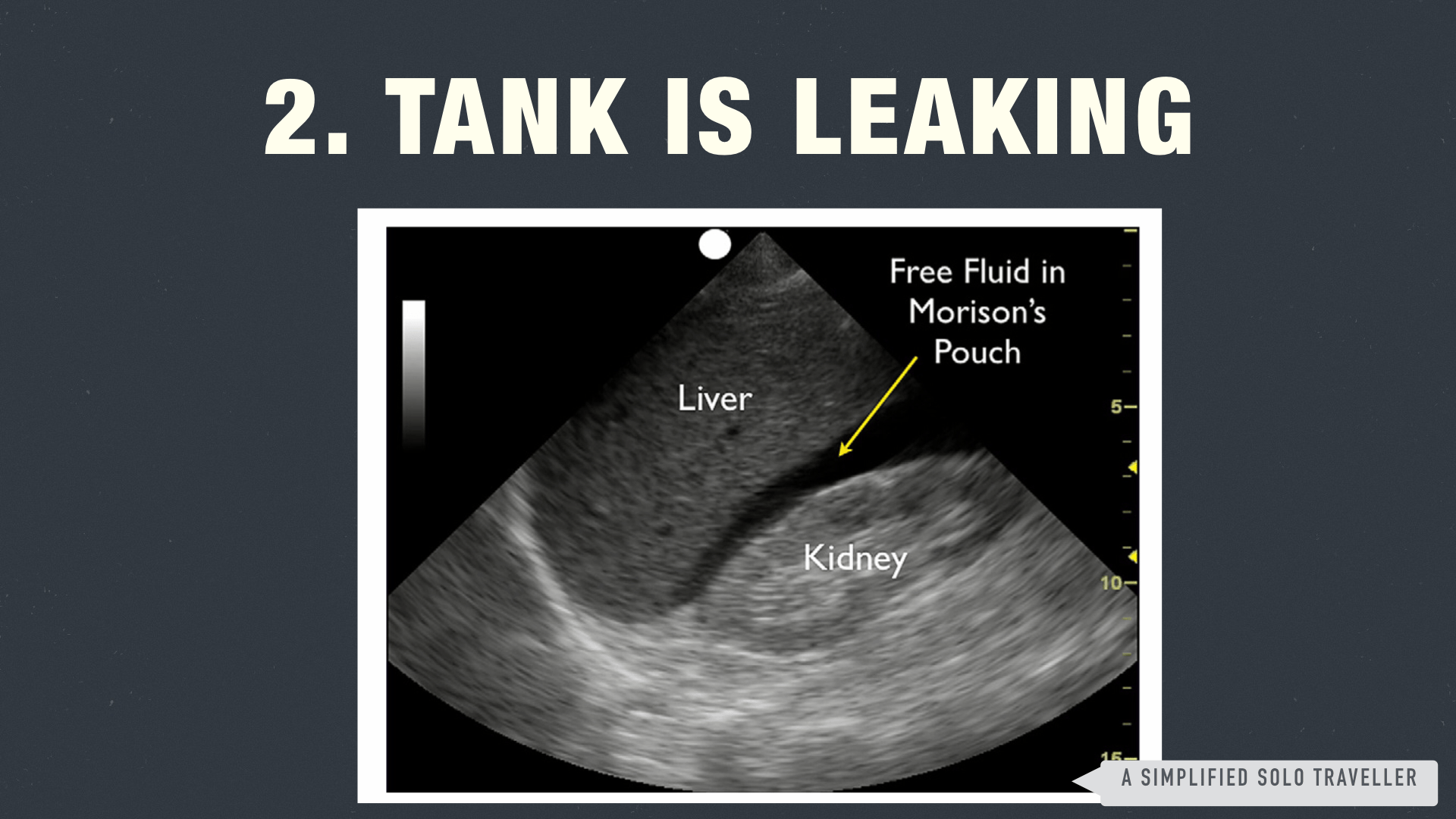
🥃 Tank is leaking ใช้ probe curvilinear เหมือนทำ FAST เช่นเสียเลือด เช่น hemothorax, intra-abdominal free fluid (ultrasound สามารถตรวจพบ fluid เพียง 100 ml ได้)
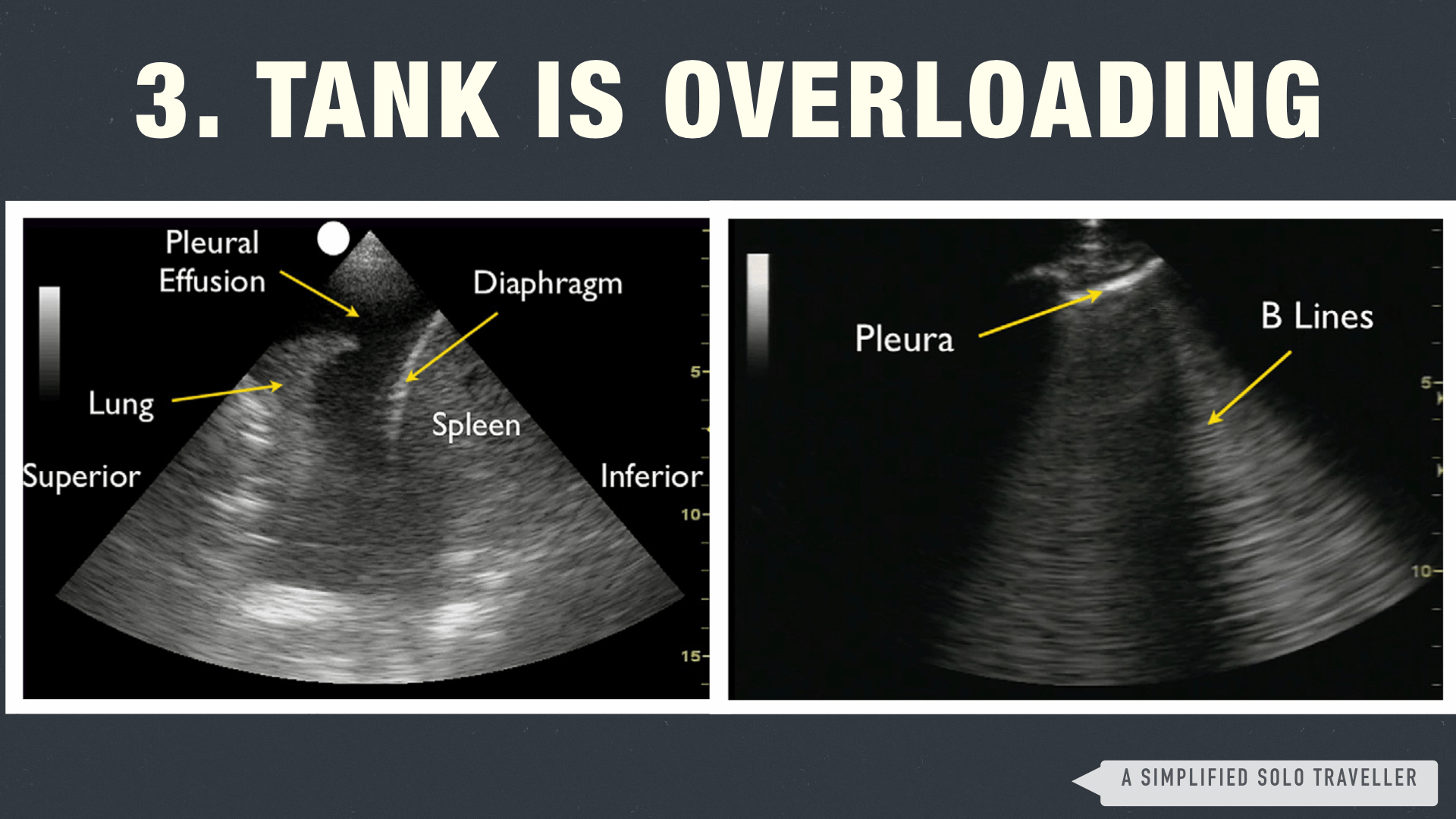
🥃 Tank is overloading เช่นน้ำท่วมมี pulmonary edema, heart failure ใช้ probe curvilinear จะพบ B line และ pleural effusion เป็นต้น
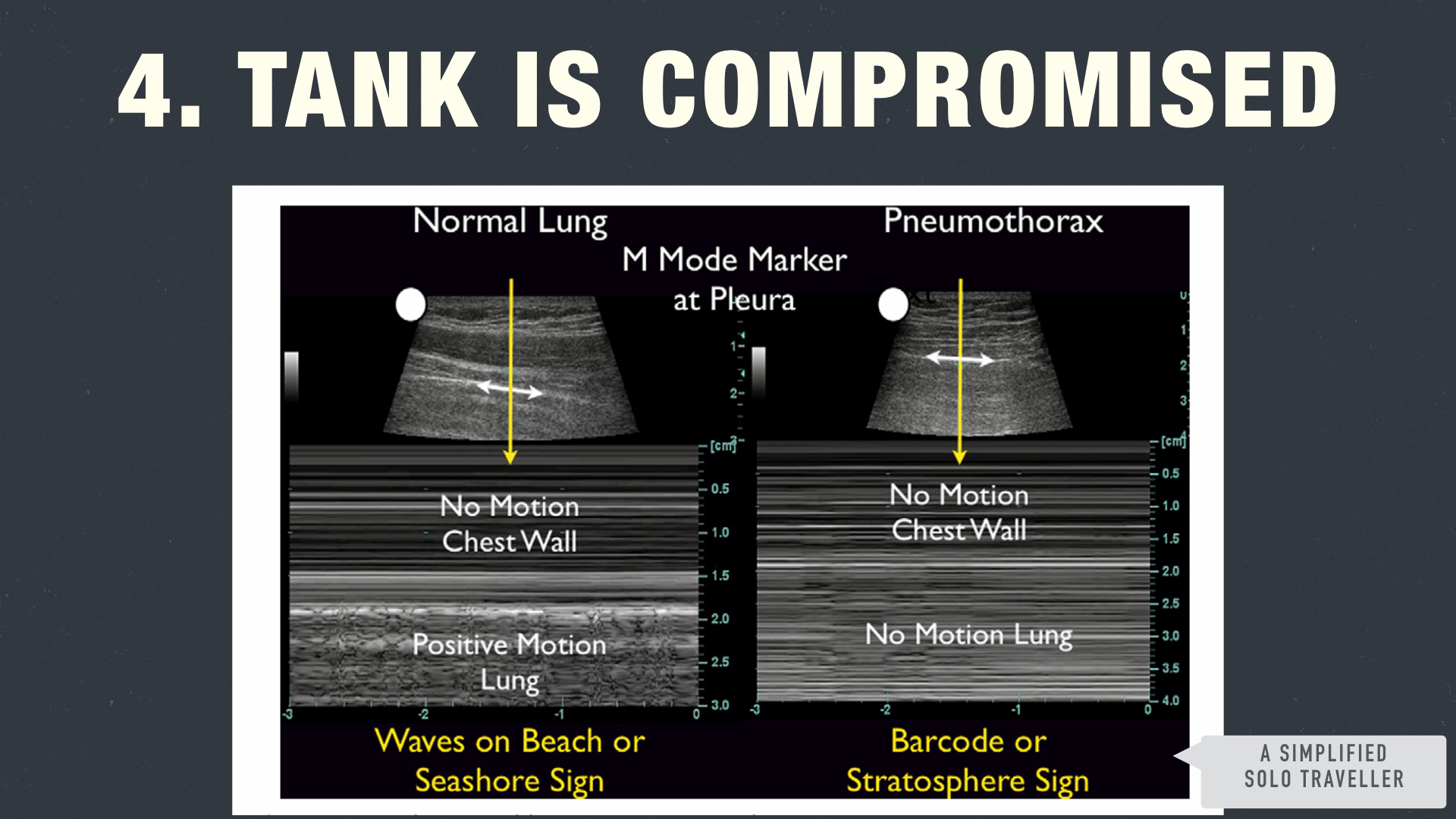
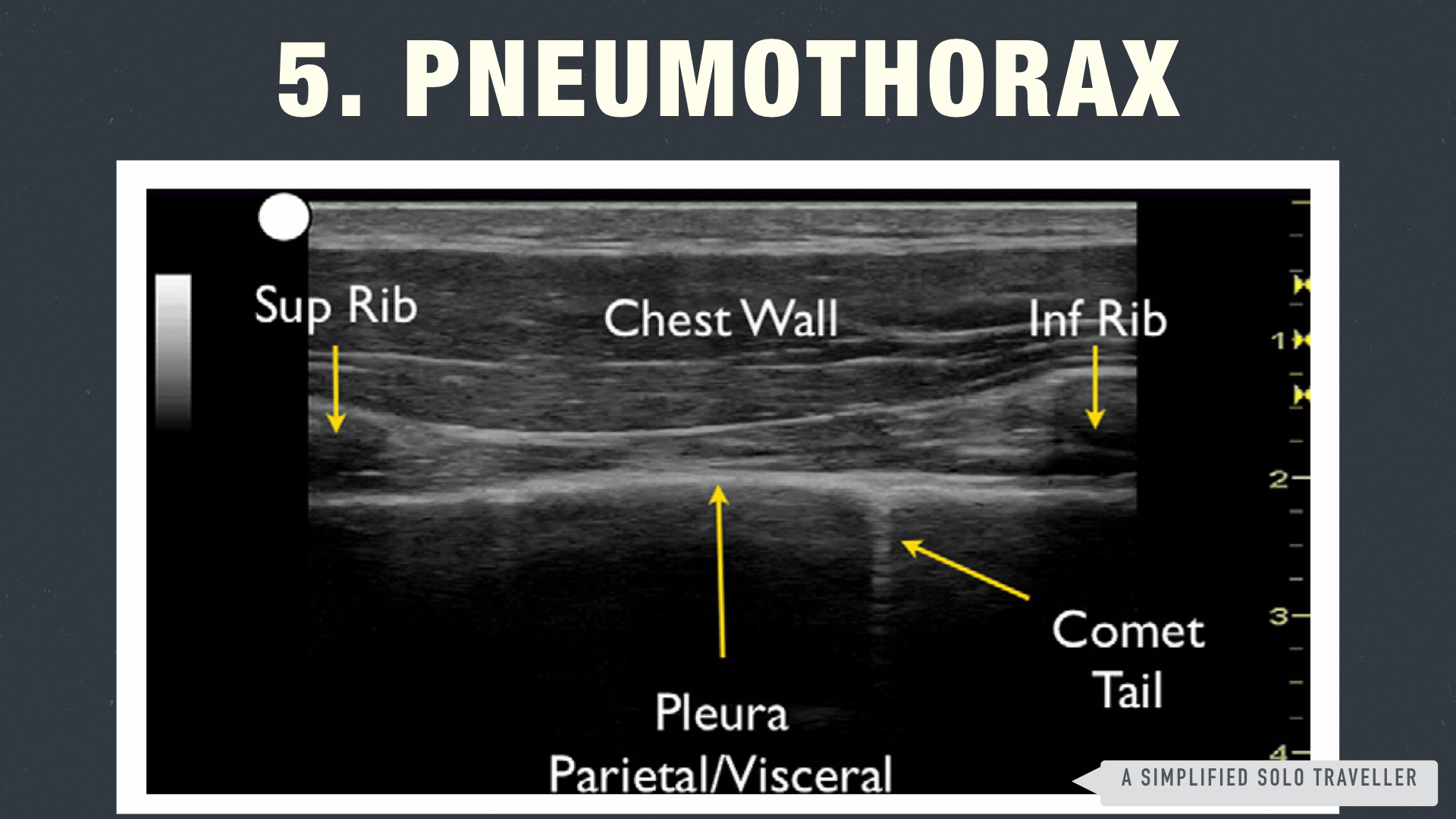
🥃 Tank is compromised เช่นมี pneumothorax ใช้ linear probe ดูที่ 3-5 intercostal space midclavicular line ให้ดู lung sliding sign, lung point และ barcode/stratosphere sign
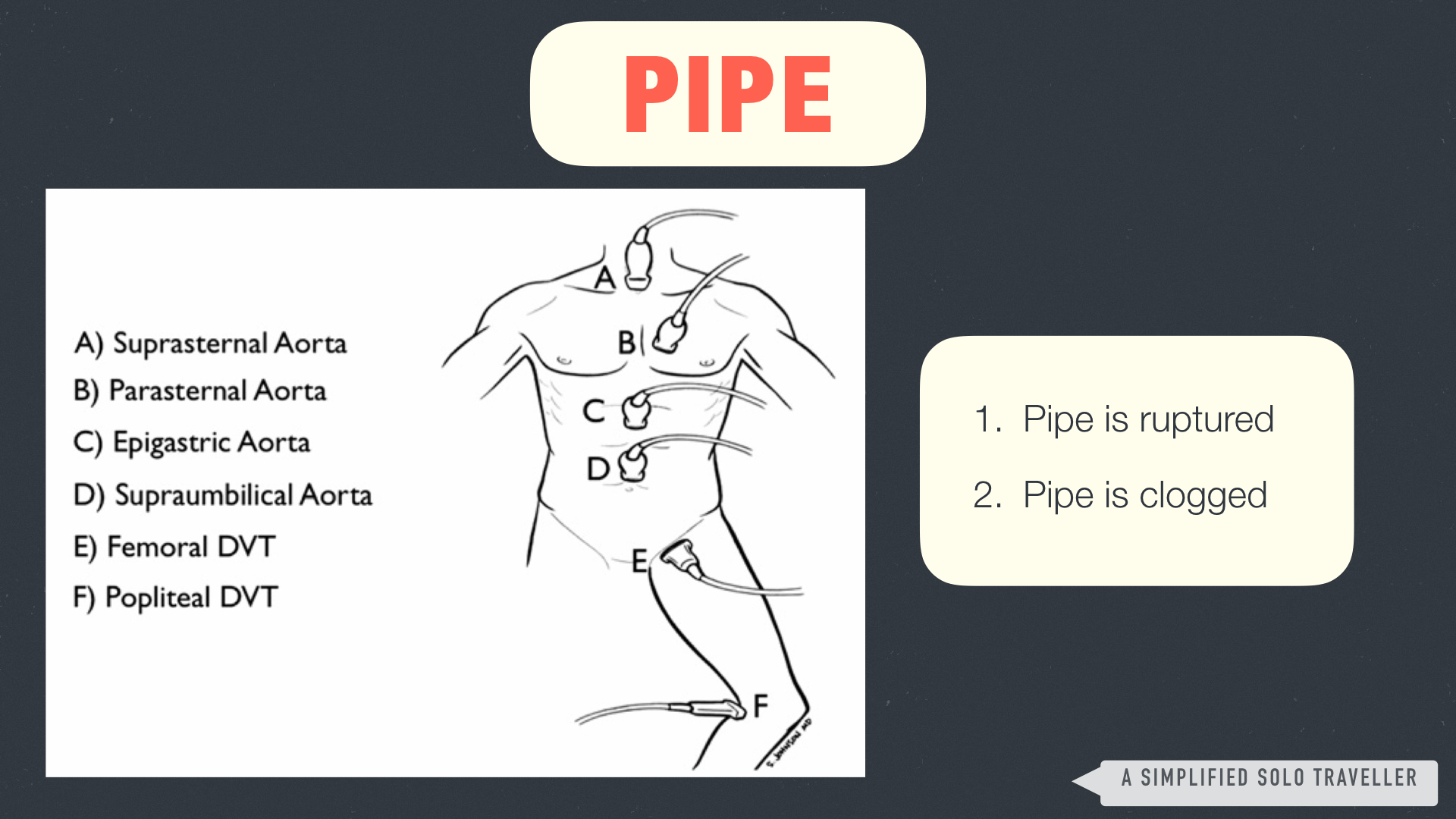
3. Pipe ประเมินที่ artery และ veins เช่น aortic aneurysm/dissection และ deep vein thrombosis สิ่งที่ต้องดูคือ
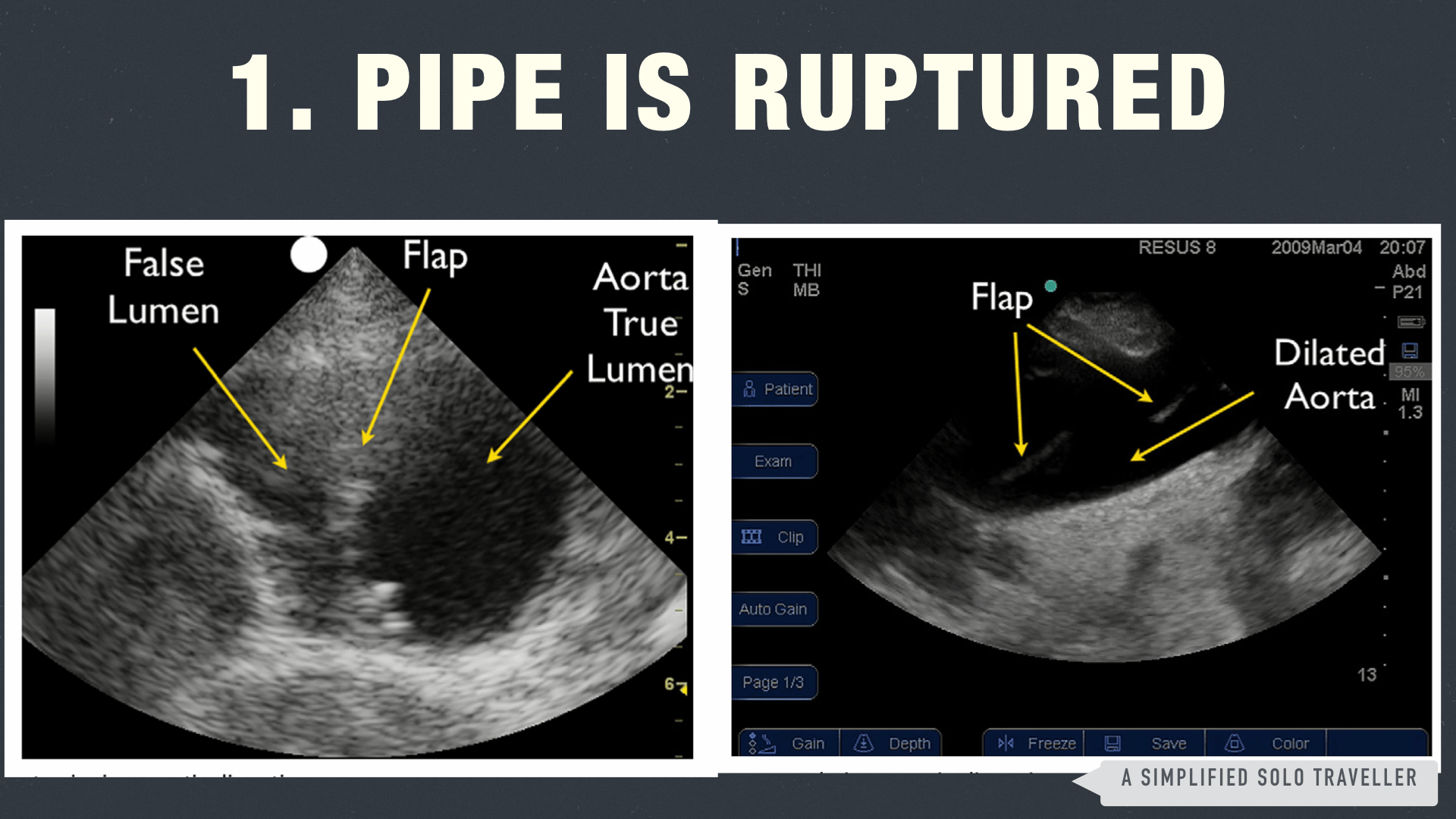
🚿 Pipe is ruptured ใช้ curvilinear probe ดูที่ aorta เช่นมี ruptured aortic aneurysm โดยจะพบขนาด aorta > 3 cm, aortic root dilatation, intimal flap, aortic regurgitation และ pericardial effusion
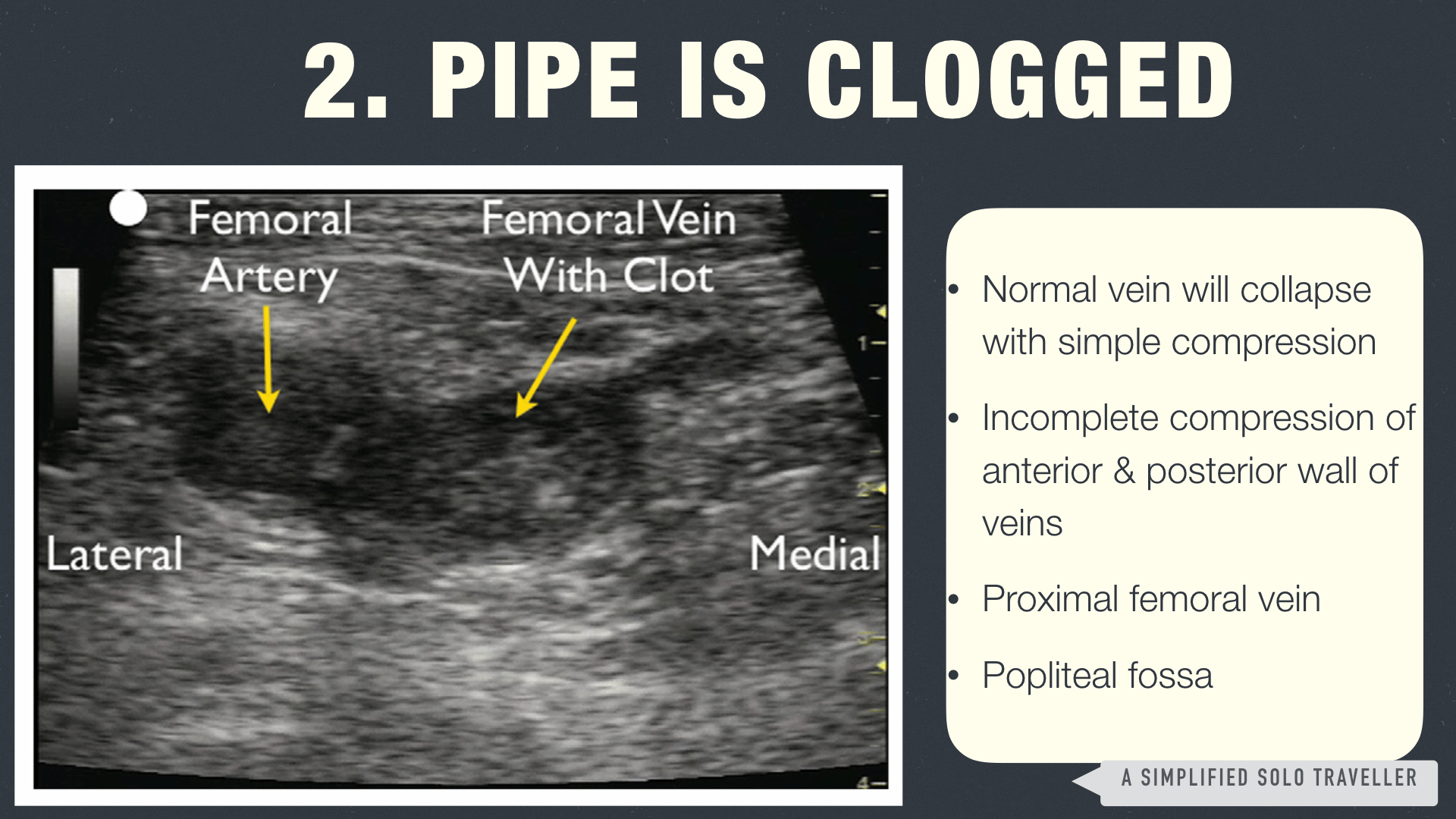
🚿 Pipe is clogged ใช้ linear probe ดูที่ vein เช่น deep vein thrombosis ใน normal vein จะกดแล้วสุด (collapse with compression) แต่ถ้ากดไม่ได้แสดงว่าอาจมี clot อยู่ ถ้าไม่มั่นใจสามารถเปิดดู flow ได้ โดยจะดูคร่าวๆ ที่บริเวณ common femoral vein ใต้ต่อ inguinal ligament และที่ popliteal fossa
⭐️ หลักการของ RUSH Exam ให้จำง่ายๆ 3 ข้อคือ Pump, Tank, Pipe ถ้าคิดอะไรไม่ออก ลองทำ ultrasound ดู อาจจะช่วยในการประเมินคนไข้ไม่มากก็น้อยค่ะ อย่าลืมประเมินให้ครบทุกข้อและบันทึกรูปด้วย หากทำแล้วเชี่ยวชาญ การดูทั้งหมดสามารถทำได้ในเวลาน้อยกว่า 5 นาทีด้วยซ้ำค่ะ
#rushexam #rush #rushultrasound #ultrasound #pointofcare #pump #pipe #tank #emergencymedicine #shock
 A Simplified Solo Traveller
Leave a comment